
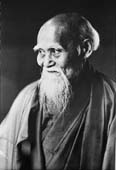
 The Aikido section of our club is directed by Gildo Mezzo, 7th dan Aikikai. Gildo began studying Aikido in 1967. After three years of practice in Geneva he left for Japan to pursue intensive practice at Hombu dojo in Tokyo (the seat of the Aikikai). He remained there for five years and received 1st dan.
Back in Switzerland in 1975, he began teaching Aikido at SDK. At this time there were only a few students. The previous Aikido section at SDK was divided between those who wished to follow Mochizuki sensei’s style, and those wanting to follow Aikikai style who were waiting for a teacher. Beginning with one class a week, the section grew larger and more active. It now counts some one hundred and twenty practitioners (children, adolescents and adults). There are now four weekly classes for adults and two for children and adolescents.

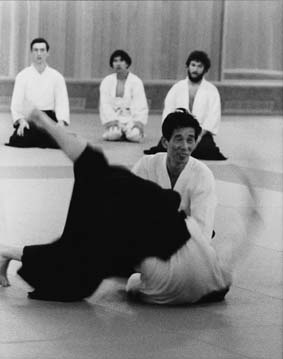
The aikido section of our club was developed by Gildo Mezzo, an Aikikai 7th dan. Gildo began his aikido training in 1967. After three years of practice in Geneva, he went to Japan to undergo intensive training at the Tokyo Hombu Dojo (World Aikido Center). He stayed there for five years and earned his 1st dan.
Upon his return to Switzerland in 1975, he began teaching aikido at the SDK (Swiss Kiteboarding Association). At that time, he had few students, as the former SDK aikido section had split between those who had decided to follow the Mochizuki style, Yoseikan Budo, and those who preferred the Ueshiba style and were simply waiting for an instructor. With one class per week, the section gradually grew and expanded. Today, it has around 120 members (adults and children), with about thirty students regularly training on the tatami. The number of classes has increased to four weekly classes for adults, led by Gildo Mezzo, and two weekly classes for children, taught by two or three advanced students.
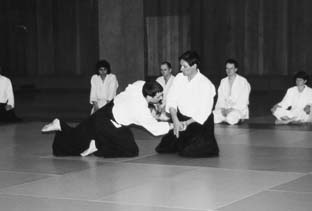
The section is very active. It holds approximately eight training sessions per year and welcomes numerous masters of the discipline, including: in the past, Master Kitaura, Master Chiba, and the late Masters Yamaguchi, Fujimoto, Tamura, and Merit; and currently, Master Tissier, Master Gouttard, Master Orban, and Master Bachraty.
Thanks to the constant efforts of Gildo Mezzo, the section currently boasts around thirty black belts who regularly participate in training and thus motivate the less experienced practitioners.